A solid profile does more than tick an analysis box. It demonstrates how you believe as an instructor, how you develop assessment, and just how you reply to real individuals in actual contexts. While you complete TAE40122, your portfolio can become a living body of work that supports analysis now, acknowledgment of prior knowing later on, and work applications lengthy after college graduation. The trick is to develop it purposely from week one, not clamber at the end.
I have reviewed numerous portfolios from striving instructors and assessors. The very best ones did not look elegant for it. They told a clear story. They recorded choices, not simply results. They mapped evidence to systems, revealed responses loops, and dealt with personal privacy well. Most notably, they proved the person might apply the concepts of assessment and rules of evidence under typical office constraints, not perfect laboratory conditions.
What a profile is for, and that it requires to convince
Think of three audiences as you construct work throughout your cert iv in training and assessment:
- Your assessor, who requires to see legitimate, adequate, authentic and existing proof mapped to the TAE40122 systems, and to the principles of assessment. A future company, that skims for concrete examples that match their atmosphere, such as compliance-ready assessment devices and LLN adjustments. You, six months from now, rejuvenating your memory prior to you facilitate a new program or rest a competency conversation for a new industry.
Those audiences want various things. Your assessor needs tight mapping and conformity notes. A working with supervisor desires proof you can develop and run assessments safely in their context. You need a system you can browse quickly. The profile you build throughout your certificate 4 in training and assessment must serve all three.
The framework of TAE40122, without the lingo fog
If you are completing the present trainer and assessor course, you are most likely enlisted in TAE40122, usually called the cert 4 training and assessment, cert iv in training and assessment, or certificate iv training and assessment. Regardless of branding, the core remains the exact same. You need to show you can:
- Interpret a training plan and unpack devices of proficiency right into understanding and assessment. Design, create and verify evaluation tools that meet the concepts of analysis: fairness, adaptability, credibility, and reliability. Collect proof that satisfies the guidelines of evidence: credibility, adequacy, authenticity, and currency. Facilitate knowing, involve learners, and assistance varied mates including foundation abilities and LLN needs. Conduct evaluations ethically, document outcomes appropriately, and take part in small amounts and validation.
Your profile needs to make each of those noticeable. Not brightened in theory, yet demonstrated through artefacts and discourse. If a stranger might get your folder or open your e-portfolio and trace just how you made an analysis decision, you are on the right path.
What employers actually look for in a TAE portfolio
When I have worked with Cert IV TAE grads, I seek 4 signals:
- A full evaluation tool collection, not just an activity worksheet. That means a clear assessment plan, candidate directions, assessor guidelines, observation lists, mapping matrix, noting advice, and evidence recording forms. Contextualisation that appreciates the training plan needs. Program me you can change resources for a friendliness venue or a civil building website without compromising proficiency requirements. LLN adjustments that are deliberate, not paternalistic. Highlight the adjustment you made, why you made it, and exactly how you kept the performance proof intact. Evidence handling that withstands audit. Version control, assessor sign-offs, third-party reports, and protection or permission arrangements. Sloppy file names and anonymous presence sheets ring alarm bells.
Your profile is the only location to reveal this deepness prior to you have a lengthy employment history as a trainer. Deal with each artefact as an ability statement.
Build around a clear structure
Most pupils collect material as they go and try to stitch it with each other at the end. That method costs time and risks missing out on signatures or contextual notes you will certainly not remember later. Decide your structure before you build.
Here is a straightforward, audit-friendly architecture you can adjust:
- Front issue: a one-page index, a system mapping summary, and a brief declaration of your target industry focus. Unit folders: one for each relevant TAE40122 device, each with a mapping index connecting to artefacts. Place the mapping in simple view so your assessor is not hunting. Project collections: for every analysis device you created, consist of the analysis plan, candidate directions, assessor guide, mapping, instruments, benchmarks, and example finished proof (with approval or de-identification). Facilitation proof: session strategies, slide decks, discovering sources, annotated white boards images, and short reflections on interaction methods used. Validation and small amounts: documents from taking part in validation, at the very least one validation strategy and report, plus notes on modifications made to the devices as a result. LLN and foundation abilities: your LLN analysis sample, a needs evaluation, and examples of affordable changes made with reason linked to the system requirements. Administration and conformity: analysis decision documents, expertise discussions, third-party records, attendance documents, variation control register, and permission forms.
The precise labels matter less than consistency. If you preserve a solitary identifying convention from day one, you will certainly halve your admin work.
A sensible naming system that saves you
I recommend names that inform you what the documents is, what system it comes from, and which variation it is. For example:
TAE40122 TAEASS412AssessmentPlan CommunityServicesv1.3 2026-03-18. pdf TAE40122TAEASS413 ObservationChecklistBarista v2.02026-02-10. docx
Keep date stamps in ISO style so files type chronologically. When you modify anything following recognition or assessor feedback, bump the version and include a brief adjustment visit the footer. A simple table with Day, Version, Modification, and By is enough.
What counts as excellent proof while you study
An usual false impression is that everything has to be workplace-derived. TAE40122 allows a mix. You can make use of your workplace, your RTO's simulated atmosphere, and third-party sources where proper. Objective to show variety, not simply amount. Take into consideration including:
- A completely created analysis tool set for at the very least two various systems or job roles, also if only one is needed for proficiency. This includes hiring value. A functional LLN evaluation and two distinctive modifications carried out in delivery or evaluation. Keep before and after variations to show your decision making. At least one taped assistance segment of 5 to 15 minutes. Much shorter clips that reveal particular methods, like questioning to check understanding, can be more powerful than a long, plain session recording. A validation meeting document where your tool was scrutinised. Consist of the recognition plan, mapping proof used, searchings for, and modifications you made afterwards. A third-party report, appropriately finished and authorized, for an assessment you performed or co-conducted under supervision. Reflections of 200 to 400 words on circumstances that needed judgment, such as managing problem of interest, borderline expertise, or resubmission policies.
The factor is to show you can run in the fitness instructor and assessor space with honesty and method. If a piece adds nothing to that story, leave it out.
Designing evaluation tools that stand up under pressure
In the cert iv trainer assessor path, evaluation tool layout distinguishes standard from outstanding. A common challenge is to begin with jobs and just later attempt to connect them to the efficiency requirements. Reverse the order. Begin at the unit, after that build jobs that collect the right evidence.
I like to start at the efficiency evidence, then map performance standards and understanding proof against reasonable jobs. As an example, if you are developing devices for a hospitality device, construct a solution shift simulation that generates numerous proof factors in one go: client interaction, hygiene, team effort, issue handling, and money handling. Construct assessor checklists with clear visible practices, not unclear descriptors. For understanding proof, short-answer questions can function, but scenario-based questions decrease thinking and are much easier to warrant at audit.
Always include practical change advice in the assessor guidelines. If a candidate has an LLN need, the assessor can supply dental inquiries secretive or allow extra analysis time, but the device should specify how to do that without eroding the proof requirements. Note what can and can not be readjusted. Your portfolio needs to reveal that you assumed this through at layout time, not as a last-minute scramble.
LLN and foundation abilities, handled with care
A portfolio that only pays lip solution to LLN will certainly not thrill an assessor or employer. Show that you can identify demands early and integrate assistance, not bolt-ons. Include:
- An LLN evaluation instrument you piloted, with notes on its readability level and trial outcomes. An instance of changing candidate guidelines to ordinary English. Program the initial and the revised version, and annotate the changes. If the original went to an ACSF analysis level of approximately 4, and your associate sat in between 2 and 3, discuss how you reduced complexity without oversimplifying the task. A micro-adjustment listing for a single activity: font style size, simple language terms, symbols used for wayfinding, and a graphic revealing the flow of a process, all lined up with the unit's requirements.
Remember, LLN changes can not alter what is being analyzed. They only change how the candidate accesses or reveals the proof. Your profile makes depend on when that concept is obvious.
Protecting privacy and authenticity
Two issues trip up lots of trainees in a trainer and assessor course: discretion and credibility. If you consist of any workplace paperwork, de-identify it completely. Get rid of names, call information, and exclusive data. Replace with common labels like Prospect A or Store 3. If your evidence consists of minor students or sensitive services, acquire written approval or usage substitute artefacts instead.
On credibility, your assessor has to be pleased the job is your own. Usage versioning and drafts to show advancement. Ask a supervisor or mentor to offer quick attestations where required. For video clip, a brief intro stating your name, the date, and the session objective is adequate. For third-party reports, make certain they are authorized by an individual who really observed you, not a friendly colleague doing you a favour. Auditors place this quickly.
A regular rhythm that substances right into a strong portfolio
Without framework, evidence accumulate arbitrarily and ends up being a frustration. With a light regular, it flows.
Here is a simple detailed tempo you can follow during your cert 4 in training and assessment:
- Pick one profile artefact to complete each week: a draft tool, a reflection, a video fragment, or a mapping table. Emphasis defeats bingeing. File and name everything the same day. Add a two-sentence note on context so you are not thinking later. Seek one item of responses per fortnight, either from your assessor, a peer, or a work environment mentor. Catch the comments and the adjustment you made. Update your device mapping index monthly. If you can not link a piece of proof to a performance standard or knowledge demand, concern its value. Schedule LLN and recognition tasks deliberately. Do not leave them to the last month, as they normally include others and require lead time.
Presenting electronically without gimmicks
E-portfolios beat paper for a lot of learners in the TAE cert 4. You can utilize an understanding administration system if your RTO gives it, but a well-organised cloud folder structure likewise works. Some fitness instructors like a light-weight website builder with navigating to each system and job. Maintain the tech simple. If a hiring supervisor or assessor needs logins or unique software application, you produce friction.
Embed or link short clips instead of uploading unabridged recordings. Include a 30 to 60 second voiceover walkthrough of an essential tool, discussing your design options and exactly how you verified it. That small financial investment often leaves a more powerful perception than a 30-page paper alone.
Demonstrating facilitation abilities on camera
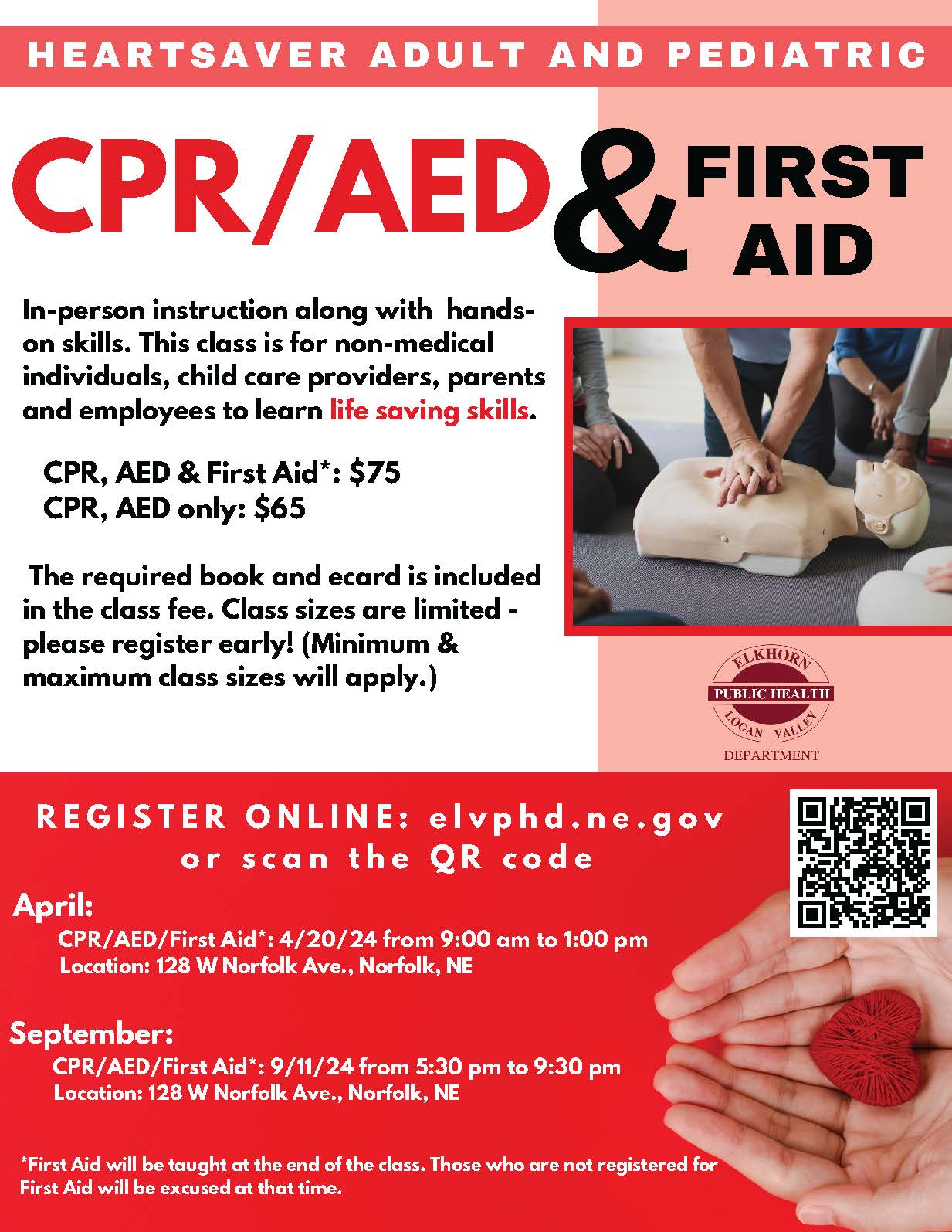
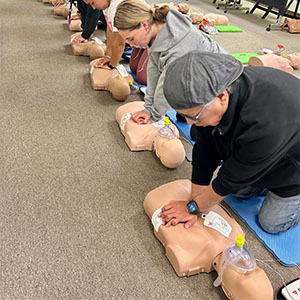
Recording your facilitation may really feel unpleasant. Do it anyway. Select sections that reveal decisions, not simply you speaking. For instance, film a 7-minute stretch where you scaffold a practical task, use examining to inspect understanding, then pivot when a learner misunderstands an action. Annotate the clip with timestamps and remarks in your profile. That comment makes it simple for an assessor to locate proof of details skills, and it mirrors exactly how auditors sample sessions.
If shooting in an office, obtain approval and obey site regulations. If that is not feasible, imitate with peers in a secure atmosphere. The factor is not shiny production, yet visible practice.
Using recognition to lift the top quality of your tools
Validation is where several students discover weaknesses in their analysis design. Do not treat it as an afterthought. Document the process and the effect.
Include the recognition plan, the validator's qualifications, the sampling technique, and a list of enhancements you made. For instance, you may reduce ambiguity in a performance checklist, include version solution to standardise marking, or divided a multi-part job so that proof is simpler to capture. Put before and after variations side by side in your portfolio and show briefly on the adjustment. Two or three paragraphs suffices to reveal learning.
A portable list to maintain you honest
Use this quick list to pressure-test your profile prior to submission or task applications:
- Can a stranger browse your framework in 2 clicks to any system or artefact? Does every evaluation device established consist of plan, instruments, mapping, criteria, and tape-recording forms? Where you made LLN modifications, have you shown your thinking and managed proof requirements? Are all third-party reports, approval types, and sign-offs complete and legible? Do a minimum of 2 pieces of evidence demonstrate change after feedback or validation?
Common errors that sink or else good portfolios
I see 3 persisting issues. First, people blunder quantity for adequacy. Fifty web pages of undistinct material signals disorganisation. Curate, do not unload. Second, devices without assessor support. Candidate instructions alone do not make a tool compliant. Add criteria, decision regulations, and context for sensible change. Third, weak mapping. A mapping matrix ought to stand on its own. If you require a decoder ring to connect jobs to performance standards, rebuild the tool or make clear the link.
A subtler mistake is over-contextualisation. You can customize to a niche role, yet do not slim jobs a lot that evidence no longer shows the complete breadth of the unit. For instance, a logistics assessment that only covers forklift pre-starts misses out on planning, communication, and threat control required elsewhere in the unit. Equilibrium realism with coverage.
RPL, credit rating, and re-use without duplicating mistakes
A thoughtful profile now conserves you time later if you go after tae course RPL for upgraded units or a diploma. Keep versions, recognition records, and de-identified examples fresh. RPL assessors seek money within the previous 2 to 3 years, so diarise updates. If you relocate sectors, include a couple of brand-new contextualised devices to link the space. Do not re-use a tool thoughtlessly; record what you changed and why.
For those moving from the older certificate 4 training and assessment to TAE40122, your existing materials still assist, yet be specific regarding alignment to the brand-new unit demands and any kind of gaps you loaded. Keep a short crosswalk note in your portfolio.
A short vignette from the field
One learner I coached operated in community services. Her very first effort at an analysis device for an interaction system had web page after web page of short-answer questions. It was practically mapped however lifeless. We rebuilt around a situation management simulation that created duty plays, situation notes, and a reflective debrief. She created assessor checklists that caught paying attention behaviors, reframing, and acceleration protocols. We replaced half the inquiries with three circumstance prompts tied to policy documents.
The result looked lighter yet brought richer evidence. Throughout recognition, a senior fitness instructor flagged variance in exactly how various assessors might evaluate "compassion." She added benchmark instances and tightened up the monitoring descriptors. Her profile showed the original version, the validator's comments, and the modified tool with a marked adjustment log. In interview, she took out a one-minute display capture describing the modification. She was worked with instantly, not due to the fact that the profile was shiny, but due to the fact that it showed judgment and discovering in motion.

Selecting artefacts for task applications
When you request a fitness instructor setting, recruiters rarely read a whole cert iv TAE portfolio. Assemble a role-specific pack attracted from your master set. If the job is in retail, send out a concise toolkit for a customer support unit and a short clip of a high-energy facilitation section. If it remains in resources, send a risk analysis tool collection and an example of adjusting directions for low-bandwidth environments.
Keep the pack under 15 pages plus links. Open with a one-page recap that lists your units, sectors, and a short note on your analysis ideology. Web link to your full portfolio for deepness, yet put your ideal proof up front.
Bringing it with each other without making it heavy
Your portfolio is not a museum. It is a workshop. Keep it neat, annotated, and all set to use. As you advance via your trainer and assessor courses, place each job to work two times: as soon as for evaluation, when for employability. When you establish a tool, consider the company you desire and add the added piece that would excite them, such as a danger analysis or a personal privacy protocol.
If you adhere to a regular cadence, call your data systematically, and document modification after responses, you will finish with more than a certificate. You will hold a visible performance history of training and assessment practice that mirrors the standards of the cert iv tae and the realities of the job.
And when someone asks, Can you show me exactly how you design fair and legitimate evaluation for mixed-ability associates in a hectic work environment, you will certainly not discuss. You will certainly open your profile and reveal them.